Dental implants are a popular solution for replacing missing teeth and restoring everyday functions like chewing and speaking. They are designed to provide stability, comfort, and a natural-looking appearance. However, like other dental treatments, dental implants can sometimes develop complications that require professional attention.
Whether you recently received an implant or have had one for several years, knowing which symptoms to watch for is important. Pain, swelling, bleeding, or a loose implant crown may indicate an underlying problem.
But how do you know when to contact an emergency dentist instead of waiting for your next dental appointment?
Understanding the warning signs, possible causes, and appropriate next steps can help you protect your oral health. This guide explains when dental implant problems need urgent attention and how professional dental care can help.
What Are Dental Implants and How Do They Work?
Dental implants are artificial tooth roots, usually made from titanium, that are placed into the jawbone to support replacement teeth.
A typical dental implant system includes:
-
Implant post: A small metal post placed into the jawbone.
-
Abutment: A connector attached to the implant.
-
Dental crown: The visible replacement tooth designed to resemble a natural tooth.
After placement, the implant needs time to integrate with the surrounding bone. This healing process helps create a stable foundation for the replacement tooth.
At Prime Smile Dental, patients can explore options such as single-tooth implants, All-on-4 implant-supported bridges, and snap-in dentures.
6 Signs Your Dental Implants May Need Emergency Dental Care
Not every implant-related concern is a dental emergency. However, certain symptoms should never be ignored.
1. Severe or Increasing Pain
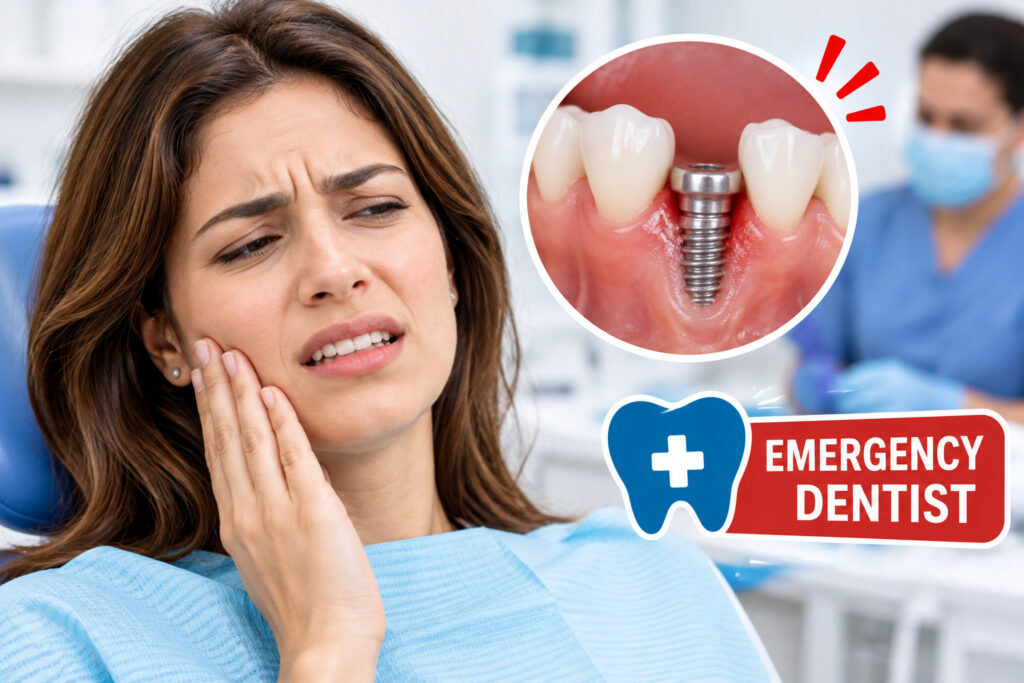
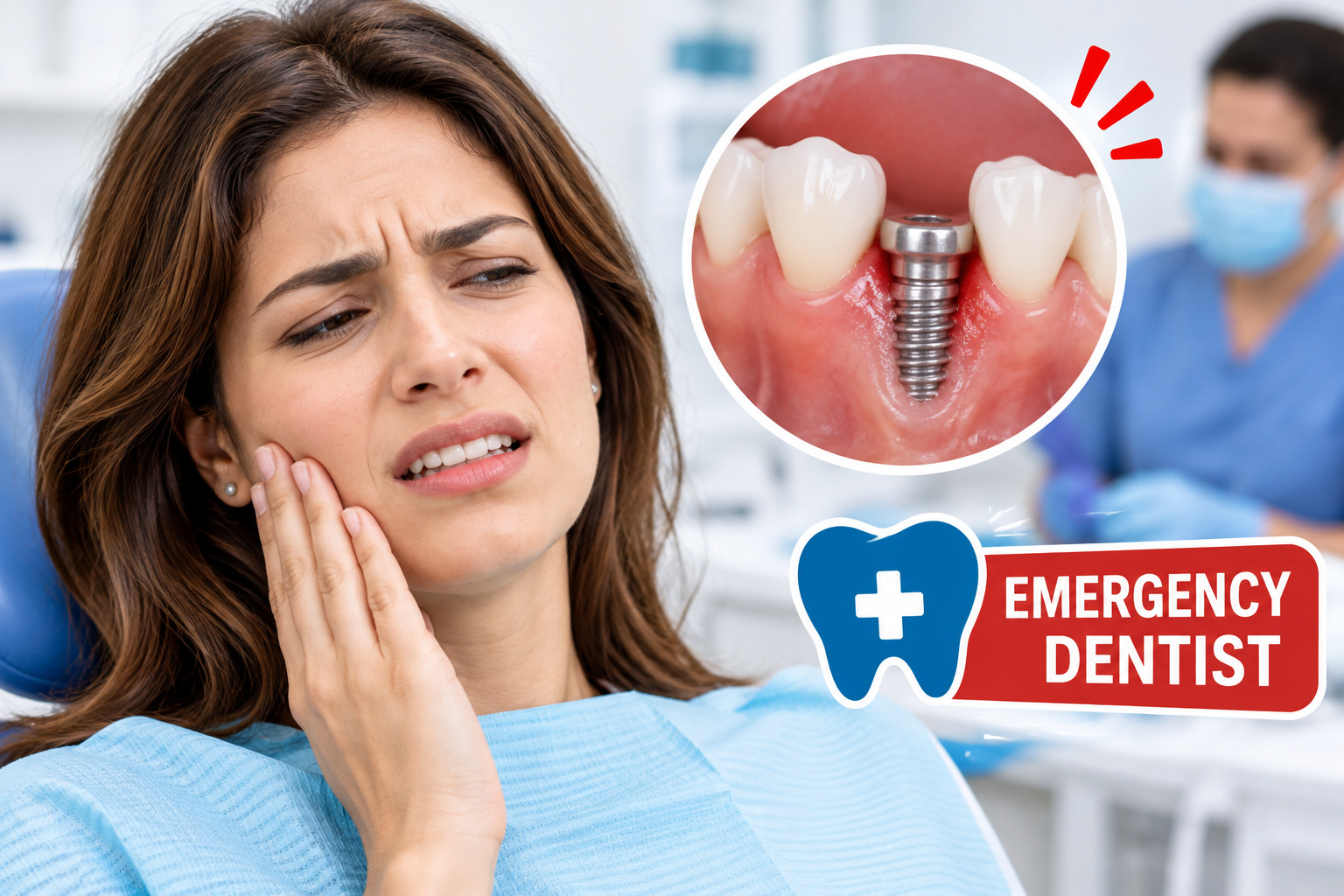
Some soreness and discomfort may occur after implant surgery. However, pain that becomes worse instead of gradually improving may indicate inflammation, infection, or another complication.
Contact your dentist if you experience:
-
Persistent or worsening pain.
-
Discomfort that interferes with eating or sleeping.
-
Pain that returns after the initial healing period.
-
Tenderness around the implant site.
An examination can help identify the cause and determine the appropriate treatment.
2. Swelling Around the Implant
Mild swelling can occur following implant placement. However, increasing swelling, especially when accompanied by pain or fever, may indicate infection.
Watch for:
-
Swollen or tender gums.
-
Facial or jaw swelling.
-
Redness around the implant.
-
Swelling that continues to worsen.
Contact an emergency dentist promptly if these symptoms develop. Facial or neck swelling accompanied by difficulty breathing or swallowing requires immediate emergency medical attention.
3. A Loose Dental Implant or Crown
A dental implant should provide a stable foundation for its replacement tooth. If you notice movement, it is important to have the area examined.
Sometimes, the crown or connecting component may be loose rather than the implant post itself.
Possible warning signs include:
-
A crown that moves while chewing.
-
A change in your bite.
-
A clicking sensation around the restoration.
-
Movement of the implant itself.
Do not attempt to tighten or repair the implant at home. A dentist needs to identify which component is affected.
4. Bleeding Around the Implant
Persistent bleeding around an implant is another symptom that deserves attention.
Occasional minor bleeding may occur after surgery, but ongoing or unexplained bleeding could be associated with gum inflammation, tissue injury, or infection.
If bleeding does not stop with the pressure recommended by your dental professional, seek urgent dental care.
5. Pus, Bad Taste, or Unpleasant Odor
Discharge around an implant can indicate an infection in the surrounding tissues.
Other symptoms may include:
-
Pus near the gumline.
-
Persistent bad breath.
-
An unpleasant taste.
-
Red or inflamed gums.
These symptoms should be evaluated promptly to determine whether treatment is necessary.
6. A Broken or Damaged Implant Crown
The visible crown attached to an implant can sometimes chip, crack, or become damaged.
A damaged crown may affect chewing comfort and expose parts of the restoration to further damage.
If your implant crown breaks or becomes loose, avoid chewing on that side and contact your dentist for an assessment.
When Should You Visit an Emergency Dentist?
Knowing when to seek professional care can help prevent a manageable dental problem from becoming more complicated.
An emergency dentist can evaluate urgent dental concerns, identify the source of discomfort, and recommend appropriate treatment.
Consider seeking prompt dental attention if you experience:
-
Severe or worsening implant pain.
-
Swelling around the gums or jaw.
-
Pus or discharge near the implant.
-
Persistent bleeding.
-
A loose implant or damaged crown.
-
Fever accompanied by dental symptoms.
Important: Difficulty breathing or swallowing, rapidly spreading facial or neck swelling, or uncontrolled heavy bleeding requires immediate emergency medical care rather than waiting for a routine dental appointment.
What Should You Do If Your Dental Implant Develops a Problem?
If you notice something unusual, taking appropriate steps before your appointment can help protect the affected area.
Here are some practical recommendations:
-
Avoid chewing on the affected side: This reduces additional pressure on the implant.
-
Maintain gentle oral hygiene: Keep your mouth clean without irritating the affected gums.
-
Avoid touching the implant: Do not wiggle, tighten, or attempt to remove loose components.
-
Avoid hard foods: Stay away from ice, nuts, and other foods that may increase pressure.
-
Contact your dentist: Explain your symptoms and ask how quickly you should be examined.
-
Follow professional instructions: Use medications and home-care measures only as recommended by your dental professional.
Avoid using household glue or attempting to repair a broken implant crown yourself.
Can Dental Implant Problems Be Prevented?
Although not every complication can be prevented, good oral hygiene and regular dental visits can help maintain implant health.
Follow these everyday habits:
-
Brush twice daily using a soft-bristled toothbrush.
-
Clean carefully around the implant and surrounding gumline.
-
Use appropriate interdental cleaning tools as recommended.
-
Attend regular dental examinations.
-
Avoid smoking, particularly during the healing period.
-
Follow all post-surgical instructions.
-
Report unusual pain, swelling, or movement early.
The FDA also recommends maintaining good oral hygiene, attending regular dental visits, and informing your dental provider if an implant feels loose or painful.
FDA
How Prime Smile Dental Helps With Dental Implant and Emergency Concerns
Choosing an experienced dental team is important when you need help with implant-related concerns or unexpected dental problems.
Prime Smile Dental in Rancho Cucamonga offers dental implants for replacing missing teeth, including single-tooth implants, All-on-4 implant-supported bridges, and snap-in dentures.
The practice also provides emergency dental care for concerns such as toothaches, broken teeth, lost restorations, and dental infections. Same-day emergency appointments are offered whenever possible.
Patients can explore the following services:
If you are experiencing implant discomfort or another urgent dental concern, contact Prime Smile Dental to discuss your symptoms and arrange an appropriate evaluation.
Conclusion
Dental implants can help restore missing teeth and improve everyday comfort, but maintaining them requires proper care and regular dental checkups. Symptoms such as increasing pain, swelling, bleeding, pus, or implant movement should not be ignored.
Knowing when to contact an emergency dentist can help you receive timely treatment and avoid additional complications.
Prime Smile Dental provides dental implant and emergency dentistry services in Rancho Cucamonga, CA. If you have concerns about your implant or are experiencing unexpected dental discomfort, contact the team to discuss your treatment options and take the next step toward a healthier smile.
Frequently Asked Questions (FAQs)
1. Can dental implants become infected?
Yes. Infection can develop in the tissues surrounding a dental implant. Symptoms may include redness, swelling, tenderness, bleeding, or pus. Contact your dentist if you notice these signs.
2. When should I visit an emergency dentist for implant pain?
Visit a dentist promptly if you experience severe or increasing pain, swelling, bleeding, or signs of infection. Difficulty breathing or swallowing requires immediate emergency medical attention.
3. What should I do if my dental implant feels loose?
Avoid chewing on the affected side and do not attempt to tighten the implant yourself. Contact your dentist so they can determine whether the crown, connector, or implant itself is loose.
4. Can a broken dental implant crown be repaired?
Depending on the damage, a dentist may be able to repair or replace the crown. An examination is necessary to determine the appropriate solution.
5. How can I keep my dental implants healthy?
Brush twice daily, clean around the implant carefully, attend regular dental checkups, avoid smoking, and follow your dentist’s maintenance recommendations.
6. Does Prime Smile Dental offer emergency dental services?
Yes. Prime Smile Dental in Rancho Cucamonga offers emergency dental care for urgent concerns, including toothaches, broken teeth, and dental infections. Same-day appointments are available whenever possible.